

16 Travel Tech & Itinerary Planning Trends Shaping 2026
.png)
The travel industry in 2026 has not only recovered from the turbulence of the early 2020s, but has transformed into a more complex, competitive, and demanding marketplace than ever. Global tourism revenue has already surpassed pre-pandemic levels and is set to grow at an average annual rate of about 5.8% through 2032 (WTTC). However, there has also been a fundamental change in how people choose, book, and experience travel.
Travellers are no longer satisfied with the basics. They expect personalization at every step, sustainability as a given, and technology that removes friction from their journeys. At the same time, there is a renewed focus on wellness, authenticity, and meaningful cultural connections. New demographics of travellers, changes in how people work and live, and the rapid advancement of artificial intelligence are all reshaping the industry.
For hotels, tour operators, and travel brands, keeping pace with these changes is imperative. The following 19 trends are already influencing guest behavior and booking decisions in 2026. Understanding these developments is essential for anyone looking to build a strong strategy in the travel sector.
1. Artificial intelligence is redefining trip planning
Artificial intelligence has become the default tool for trip planning. Travellers increasingly rely on AI-powered platforms that can generate complete itineraries in seconds, instantly adjusting to preferences like budget, mood, and travel style. In a significant leap forward, Google has rolled out new AI-driven travel planning capabilities within its search platform. The system now assembles day-by-day itineraries that include hotels, local events and activities, and even integrates reward program information – offering travellers and the industry an early glimpse into fully autonomous, AI-powered planning experiences.
For hotels, this development is raising guest expectations for predictive personalization. AI can suggest the right packages, recommend tailored add-ons, and anticipate traveller needs before they are expressed. Hotels that integrate AI-driven personalization into their booking engines and guest communications are gaining a clear competitive advantage. Those that fail to embrace these tools risk falling behind, as guests now expect highly customized, seamless planning experiences as the standard.
2. Dynamic pricing powered by AI is becoming standard
Revenue management has entered a new era. Hotels are using AI-driven tools to forecast demand with precision and adjust pricing in real time. This level of dynamic pricing allows properties to maximize occupancy and revenue without relying solely on historical data. Hotels that fail to adopt these smart pricing strategies risk being consistently undercut by more data-savvy competitors.
3. Contactless technology is about convenience rather than safety
During the pandemic, contactless technology was introduced primarily as a safety measure. By 2026, it has become a standard for convenience and efficiency. Mobile check-in, digital room keys, voice-controlled room features, and app-based service requests are now hallmarks of a modern hospitality experience. Travellers expect these options and often view the lack of them as a sign of an outdated operation.
4. Smartphones are essential travel companions
The smartphone has become an indispensable travel companion for the vast majority of travellers. From AI-powered translation apps to augmented reality city guides, people now rely on their mobile devices at every step of the journey. Hotels without mobile-optimized booking systems, responsive websites, or digital concierge platforms are losing out to competitors that have fully integrated mobile technology into the guest experience.
5. Hyper-personalized stays are the new expectation
Travellers no longer view a hotel stay as a generic, one-size-fits-all experience. They now expect their stay to feel curated just for them. Guests look for personal touches like their preferred pillow type, a curated music playlist, dining recommendations that match their dietary needs, and tailor-made suggestions for activities. The technology to deliver this level of customization already exists, and hotels that leverage it are seeing higher guest satisfaction, stronger loyalty, and increased revenue through tailored upsells.
6. Experiences are more important than amenities
Standard amenities alone no longer impress guests. Travellers are looking for memorable experiences above all. This demand has fueled a rise in partnerships between hotels and local businesses to offer things like cooking classes, cultural tours, art exhibitions, and community events. Experiential travel is no longer just an add-on; it has become the foundation for how travellers evaluate destinations and accommodations.
7. Hotels are becoming lifestyle hubs
Hotels are evolving into more than just places to sleep; they are becoming lifestyle hubs where guests can work, live, and socialize. Many properties now host community events, partner with local businesses, offer long-term stay options, and create spaces that function as cultural centers. Guests are no longer asking only, “Where will I sleep?” but also “What role does this hotel play in my lifestyle?”
8. Luxury is being redefined by privacy and authenticity
In the past, luxury hospitality was defined by extravagance and visible opulence. Today, travellers equate luxury with privacy, exclusivity, and authentic cultural experiences. Instead of grand lobbies and opulent chandeliers, modern luxury guests want private villa access, bespoke culinary experiences, and insider cultural tours. A luxury traveller in 2026 is more likely to value a private museum visit or a dinner with a local chef than a suite upgrade with gold-plated fixtures.
9. Sustainability is now the baseline
Sustainable travel has shifted from a niche concern to a core expectation. Guests are actively searching for hotels that can demonstrate real, meaningful commitments to sustainability. Practices like using renewable energy, reducing waste, conserving water, and partnering with local suppliers are no longer differentiators – they have become baseline requirements for doing business.
10. Wellness tourism continues to expand rapidly
Wellness travel is no longer about spa treatments alone. The wellness tourism sector is projected to surpass $1 trillion globally by 2026 (Forbes). This growth is driven by surging demand for holistic health and well-being experiences. Guests are seeking everything from biohacking retreats and sleep-optimization programs to nutrition-focused dining and mindfulness activities such as meditation and yoga. Hotels that build wellness into their brand identity are positioning themselves to capture long-term growth in this booming market.
11. Work-from-anywhere lifestyles keep reshaping travel
Remote work has permanently changed travel behavior, enabling new forms of work-and-travel lifestyles. The blending of business and leisure travel (often called “bleisure”) has become the norm rather than the exception. Guests are booking longer stays, seeking hotels with reliable workspaces and Wi-Fi, and combining their professional obligations with leisure experiences. Properties that invest in coworking lounges, strong connectivity, and special packages designed for digital nomads are capturing a growing segment of high-value travellers.
12. Domestic travel maintains its momentum
Even with international borders fully open again, domestic travel continues to thrive. In fact, domestic trips are projected to account for around 70% of all travel by 2030 (McKinsey & Company). Travellers are exploring regional destinations more deeply, revisiting nearby locales, and seeking unique experiences closer to home. The pandemic initially accelerated this “stay local” trend, but it has since become a lasting shift in behavior. Hotels that tailor marketing strategies to local and regional travellers are expanding their reach and building loyalty in their own backyards.
13. International travel has surged past pre-2019 levels
Global travel across borders has not only recovered from the pandemic – in many cases it has now exceeded pre-2019 levels (UN Tourism). Travellers are mixing major international trips with shorter, spontaneous getaways throughout the year. Multi-destination itineraries are on the rise as people look to maximize the value of each trip abroad. Hotels and destinations that make multi-stop planning easier are attracting more bookings from these ambitious travellers.
14. Flash sales and last-minute deals remain strong
Economic uncertainty has kept travellers hungry for last-minute deals. Online searches for spontaneous hotel bookings and short-notice travel packages continue to rise (Yahoo). Flash sales and limited-time promotions aren’t just useful for filling empty rooms – they also create a sense of urgency that pushes travellers to make faster booking decisions.
15. Brand trust is a decisive factor in bookings
Trust has become one of the most important drivers of travel booking decisions. Travellers want clearly stated policies, transparent communication, and confidence that a brand will deliver on its promises. This extends beyond safety and cleanliness; it includes honoring flexible booking terms, maintaining consistent quality, and engaging openly with customers across all channels. Hospitality brands that invest in building genuine trust are rewarded with loyalty and repeat business.
16. Social proof remains the strongest influence
User-generated content and influencer recommendations continue to heavily influence travel decisions (ResearchGate). What’s changing is the format. Travellers are tuning out glossy, polished marketing campaigns and responding instead to content that feels authentic and relatable. Short-form videos, real guest stories, and behind-the-scenes glimpses are proving more persuasive than traditional ads when it comes to inspiring travel plans.
Travel in 2026
The travel industry of 2026 is not simply in “recovery” mode: it is undergoing a full transformation. Travellers now demand personalization, sustainability, authenticity, and technology-driven convenience all at once. They want to feel that their choices are meaningful, their experiences are unique, and their time is well spent.
For hotels and travel brands, the challenge is clear – adapting to these trends is not optional. Those who embrace these changes will find growth, loyalty, and a stronger market position in a rapidly evolving landscape. Those who resist will fall behind in an industry that no longer waits for anyone.
Let’s talk growth
Trip Ninja helps travel platforms drive bookings, increase margins, and stay competitive with smarter, AI-driven solutions.



Itinerary Building 101: Multi-City Planning UX That Converts
This is how OTAs can use AI-driven flight composition to build cheaper itineraries, improve pricing competitiveness, and increase traveller conversions.
What to Expect in Travel in 2026: Key Trends in Airfare and OTA Platforms
2026 travel trends are reshaping OTAs: strong demand, value-driven travelers, AI-powered booking, NDC distribution, and fierce competition across platforms.
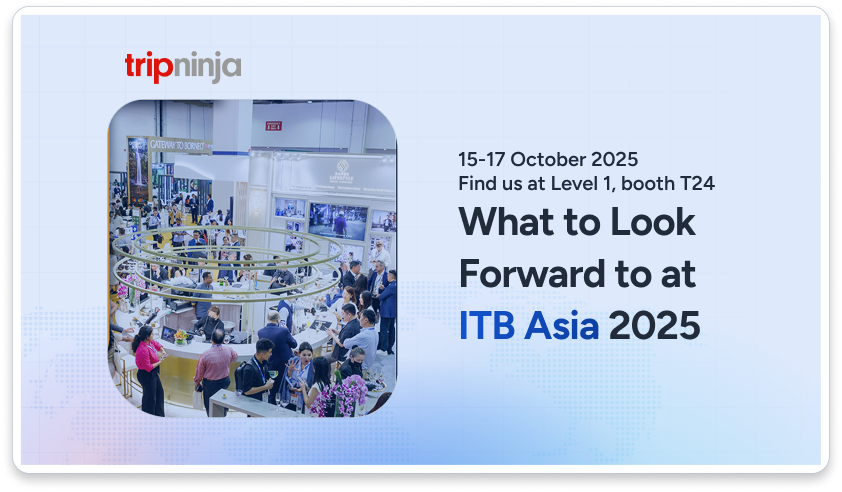
What to Look Forward to at ITB Asia 2025
Top 10 things to look forward to at ITB ASIA 2025, ITB Asia returns to Singapore with three shows under one roof: ITB Asia, MICE Show Asia, and Travel
.png)
Revolutionizing Travel Booking: How Trip Ninja Leverages Machine Learning to Outperform Traditional GDS Systems
Trip Ninja leverages machine learning to optimize routes, enable dynamic pricing, and personalize travel bookings, outperforming traditional GDS systems.
.png)
What is Multi-PNR? The Ultimate Guide for OTAs
Multi-PNR empowers OTAs to offer flexible, cost-effective itineraries by combining flights from multiple airlines. Learn how Trip Ninja simplifies it.
.png)
Consumer Trends in Multi-City Travel & How to Respond to Them
Explore 3 consumer trends in multi-city travel and how to respond to them to boost revenue as an OTA.
.png)
Top 5 Multi-City Flight Booking Trends to Watch in 2025
Top 5 multi-city flight trends for 2025: regional travel, AI personalization, sustainability, mobile-first bookings, and emerging market growth. Stay ahead with
.png)
Thriving in 2025: The Ultimate Preparation Guide for Your Online Travel Agency
Prepare your OTA for 2025 with tips on scaling operations, smarter marketing, tech adoption, and cybersecurity to stay ahead in a competitive market!
.png)
Simplify Financial Reporting: A Comprehensive Step-by-Step Guide for OTAs
The Ultimate Guide to Streamlining Financial Reporting for OTAs: Leverage automation, integration, and clear frameworks to boost profitability and efficiency

Seamless Integration with Trip Ninja: How OTAs Can Get Started
In today’s competitive travel landscape, offering affordable and flexible flight itineraries is crucial to maximize revenue as an OTA. Trip Ninja’s SmartFlight
.png)
.png)